Most people with fatty liver never need a biopsy. Liver biopsy is the histologic reference standard — the only test that directly shows fat, inflammation (MASH) and fibrosis stage together — but it carries small risks and sampling error. It's reserved for cases where noninvasive tests are uncertain or conflicting, another diagnosis is possible, or the result would change management.
Section accent: --clay (MASLD pillar, scoped in-family).
Why biopsy is still the reference standard
A liver biopsy removes a small core of liver tissue so a pathologist can look at it directly under the microscope. It remains the histologic reference standard for MASLD because it's the only test that can, in one specimen, distinguish and grade the things this whole section keeps separating:
- Steatosis — how much fat.
- MASH — whether there is inflammation and hepatocyte injury (steatohepatitis), which imaging and blood tests can only infer.
- Fibrosis stage (F0–F4) — graded directly on the tissue.
No noninvasive test does all three at once with the same certainty. That's why biopsy still anchors clinical trials and remains the tie-breaker when the picture is genuinely unclear. → What Is MASLD?
Why it's NOT for everyone
Being the reference standard does not make biopsy the routine test — and this is a point patients often get backwards. Reasons it's used sparingly:
- It's invasive and carries real (if small) risks (below).
- MASLD is extremely common; biopsying everyone with a fatty liver would be neither safe nor feasible.
- Noninvasive tests now do most of the work. The FIB-4 → elastography pathway risk-stratifies the large majority of people without a needle, reserving biopsy for the few in whom it will actually change something.
- It has its own accuracy limits (sampling variability — see below), so it isn't a flawless gold standard either.
The modern standard of care is noninvasive-first, biopsy-selective. → The W8Experts Diagnostic Approach
When biopsy is actually considered
Biopsy comes into play when it will change management or resolve genuine uncertainty. Typical situations:
- Discordant or indeterminate noninvasive tests — e.g., FIB-4 and elastography disagree, or results don't fit the clinical picture.
- Diagnostic uncertainty — features suggesting another or coexisting liver disease (autoimmune, drug-induced, or other causes) that would need a different treatment.
- Suspected advanced disease where confirmation changes decisions — for example, staging that affects therapy choice, trial eligibility, or surveillance.
- When a specific result would alter treatment — including decisions around MASH-directed therapy in selected patients. → MASH Medications
If a biopsy result wouldn't change what you and your clinician do next, that's usually a reason not to do it.
The risks
Percutaneous liver biopsy is generally safe in experienced hands, but it is a procedure, not a blood draw:
- Pain at the biopsy site or referred to the shoulder is the most common effect — roughly a third of patients (~30%) report some pain, though it's usually manageable and not a major complication.
- Bleeding is the main serious risk. Major complications (mostly bleeding) occur in about 1% of percutaneous liver biopsies; significant bleeding is the principal reason for caution, monitoring afterward, and attention to clotting and platelet status.
- Rarely, injury to nearby structures (for example, gallbladder, lung) or, very rarely, more serious complications. Death is very rare — on the order of 1 in 10,000 (~0.01%).
Because of the bleeding risk in particular, biopsy is weighed carefully against what a noninvasive test could tell you with no risk at all. Specific complication rates should be discussed with the performing team, as they vary with technique, operator, and patient factors.
The limits — sampling variability
Even the "gold standard" is imperfect, and honesty here matters:
- A biopsy samples a tiny fraction of the liver — on the order of a fifty-thousandth of the organ. Fibrosis and inflammation are often patchy, so a single core can under- or over-stage disease depending on where the needle went. This is sampling variability (sampling error).
- Reading variability — pathologists don't always grade identical slides identically (inter-observer variability).
These limits are exactly why biopsy is a reference standard rather than a perfect truth, and why a noninvasive result that conflicts with a biopsy isn't automatically "wrong." → FibroScan & Elastography
The expanding role of noninvasive testing
The trajectory of the field is clearly away from routine biopsy. FIB-4, elastography (VCTE/FibroScan and MRE), CAP and MRI-PDFF, and newer blood-based panels increasingly stratify risk, guide treatment, and monitor change over time without a needle. As MASH-specific medications arrive with defined fibrosis indications, noninvasive tests are being validated to identify and follow the patients who qualify. This further shrinks the routine role of biopsy, which remains valuable for the genuinely uncertain minority. → The W8Experts Diagnostic Approach · MASH Medications
SIGNATURE — "What the evidence says: Liver biopsy"
- What we know: Biopsy uniquely shows steatosis, MASH and fibrosis stage together and remains the histologic reference standard; it carries small procedural risks and real sampling variability.
- What we think: A noninvasive-first, biopsy-selective strategy is the right default and is displacing routine biopsy.
- What we don't know: How completely noninvasive tests will eventually replace biopsy for diagnosis, staging and trial endpoints.
- What patients should do: Understand that not needing a biopsy is usually good news, and that biopsy is reserved for cases where it will genuinely change your care. → FIB-4 Explained
Questions patients ask
Do I need a liver biopsy for fatty liver?
Almost certainly not, for most people. Noninvasive tests (FIB-4, then elastography) stratify the large majority. Biopsy is reserved for uncertain, discordant, or management-changing cases. Grade A 🟢 → Diagnostic Approach
Why is biopsy called the gold standard?
Because it's the only test that directly shows and grades fat, inflammation (MASH) and fibrosis stage together in one specimen — something no single noninvasive test does. Grade A 🟢
If it's the gold standard, why not just do it?
It's invasive, carries a small bleeding risk, isn't feasible for a condition as common as MASLD, and has its own sampling limits. Noninvasive tests now do most of the work safely. Grade A 🟢
When is a liver biopsy actually needed?
When noninvasive tests are indeterminate or conflict, when another liver disease is possible, or when the result would change treatment or staging decisions. Grade A 🟢 → MASH Medications
What are the risks of a liver biopsy?
Pain is common; bleeding is the main serious risk, though uncommon. Rare complications include injury to nearby structures. Risks are weighed against what a no-risk noninvasive test could show. Grade A 🟢
What is sampling error in a liver biopsy?
A biopsy samples a tiny piece of the liver, and disease is often patchy, so a single core can under- or over-stage fibrosis depending on where it was taken. Grade A 🟢
Is a FibroScan or FIB-4 as good as a biopsy?
They're very useful and spare most people a biopsy, but they estimate rather than directly examine tissue. Biopsy remains the reference standard for selected uncertain cases. Grade A 🟢 → FibroScan & Elastography
Can a biopsy be wrong?
It can under- or over-stage disease because of sampling variability, and pathologists can grade the same slide differently. That's why it's a reference standard, not perfect truth. Grade B 🟡
Will I need a biopsy to start a MASH medication?
Not necessarily. Noninvasive tests are increasingly used to identify and follow patients who qualify for MASH-specific therapy, though biopsy is still used in selected cases. Grade B 🟡 → MASH Medications
Is a liver biopsy painful?
Some pain at the site or referred to the shoulder is common and usually manageable. It's done with local anesthetic and post-procedure monitoring. Grade B 🟡
Are biopsies being done less often now?
Yes. Noninvasive testing — FIB-4, elastography, MRI-PDFF and blood panels — is increasingly replacing routine biopsy, reserving it for the uncertain minority. Grade A 🟢
KEEP READING
- The W8Experts Diagnostic Approach — the noninvasive-first pathway biopsy sits at the end of.
- FIB-4 Explained and FibroScan & Elastography — the tests that spare most people a biopsy.
- What Is MASLD? — steatosis vs MASH vs fibrosis, the things biopsy grades.
- MASH Medications — where a definitive stage can change treatment.
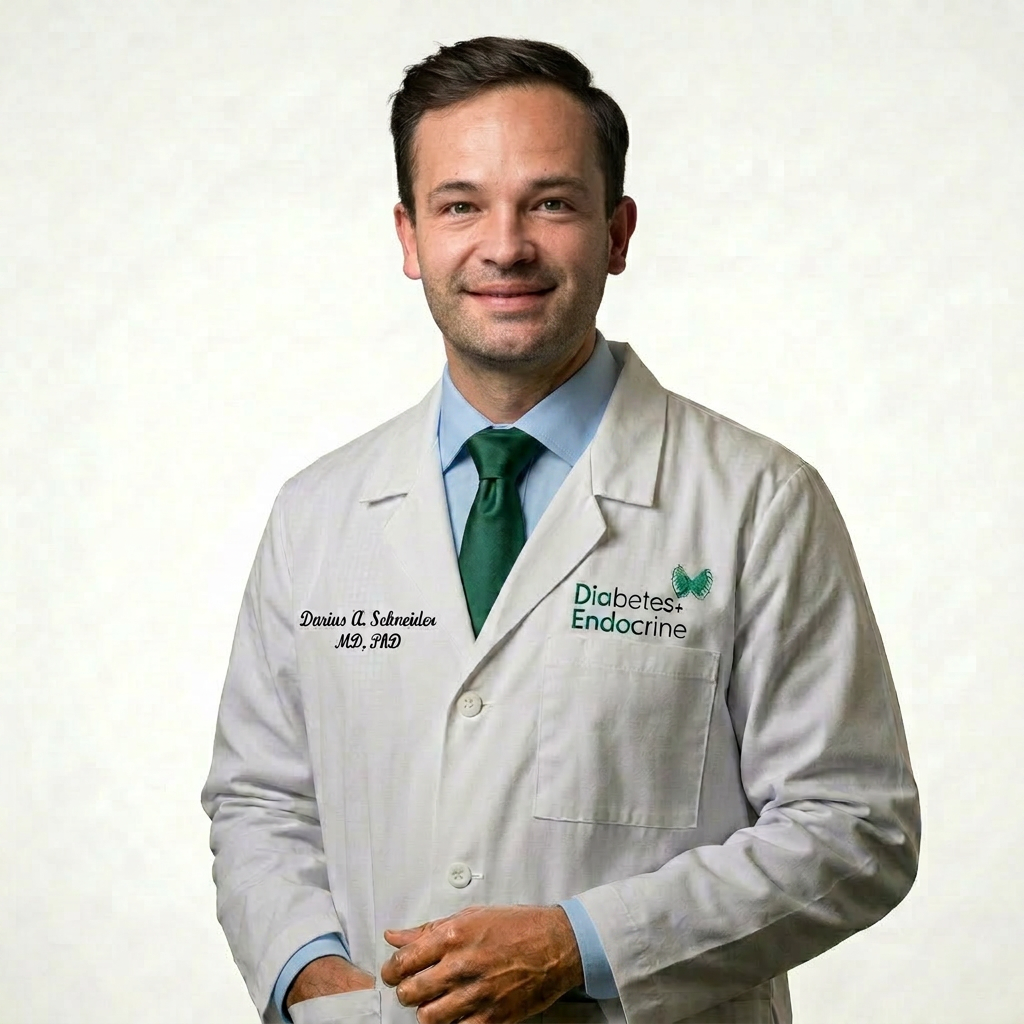
Written by Darius A. Schneider, MD, PhD · Board-Certified Endocrinologist (ECNU) · Last updated: 2026-08-10 · References: AASLD Practice Guidance on MASLD (2023); EASL–EASD–EASO clinical practice guidance; hepatology literature on liver-biopsy performance and sampling variability. Specific complication rates should be verified against current procedural references. Educational; not a diagnosis.