You usually can't feel fatty liver — it's typically silent. Risk is driven by obesity, type 2 diabetes or prediabetes, high triglycerides, low HDL and hypertension. Normal liver enzymes don't rule it out. The practical path is: assess risk factors, then a FIB-4 score, then imaging or elastography if indicated. This tool builds your risk picture — it is not a diagnosis.
Section accent: --clay (MASLD pillar, scoped in-family). Decision tool — education, not a diagnosis. Walks risk factors → what enzymes do/don't tell you → ultrasound → FIB-4 → when elastography is appropriate → when to seek evaluation. Output = your risk picture + a reasonable next step, routing to /appointments. Stores nothing.
Read this first
Our editorial spine for the liver: don't just find fat — find risk. Fat in the liver is common; what matters is whether there's fibrosis (scarring), which is the feature that actually predicts outcomes. → What Is MASLD?
The stepper — from risk to a reasonable next step
(On build: render as the shared diagnostic-pathway / decision-tool stepper. Each step links to the evidence behind it. No step outputs a diagnosis; the end result is a risk picture plus a next step.)
Step 1 · Risk factors — who actually gets MASLD
MASLD (metabolic dysfunction-associated steatotic liver disease) travels with metabolic risk. The more of these you have, the higher your pre-test probability:
- Obesity, especially central adiposity.
- Type 2 diabetes or prediabetes — a majority of people with type 2 diabetes have MASLD, and diabetes drives progression. → MASLD & Diabetes
- High triglycerides, low HDL, hypertension (the metabolic-syndrome cluster).
- Family history of cirrhosis or liver disease; certain ethnic-genetic risk.
- Alcohol matters for classification — significant alcohol plus metabolic risk is MetALD, not pure MASLD. → What Is MASLD?
Risk picture updated: How many metabolic risk factors do I carry? → Who Should Be Evaluated?
Step 2 · Symptoms — why you probably can't feel it
Most fatty liver disease is silent. There's usually no pain and no obvious symptom until disease is advanced. That's a feature, not a reassurance: the absence of symptoms tells you almost nothing about whether you have MASLD or fibrosis. This is precisely why risk-based assessment — not "how do I feel?" — drives the workup.
Risk picture updated: Feeling fine does not lower your risk if the risk factors are present.
Step 3 · What liver enzymes do — and don't — tell you
Many people equate "normal liver tests" with "healthy liver." That's a consequential mistake.
- ALT and AST measure liver-cell injury — not liver fat, and not scarring.
- You can have MASLD, and even significant fibrosis, with completely normal enzymes. Enzymes can even fall as disease advances.
- So normal enzymes are mildly reassuring at most; they do not rule out at-risk liver disease. (Grade A 🟢)
Risk picture updated: Don't let "your liver tests are normal" close the question if you have metabolic risk. → My Liver Tests Are Normal…
Step 4 · Ultrasound — good at fat, not at scarring
If imaging (often an abdominal ultrasound done for another reason) shows a "fatty liver," it confirms steatosis — fat. That's useful but limited:
- Ultrasound detects fat reasonably well but does not measure fibrosis (the outcome-relevant feature).
- A reported fatty liver is a prompt to assess risk of fibrosis, not a reason to panic or to stop. (Grade A 🟢)
Risk picture updated: "Fatty liver on ultrasound" = confirmed fat, unknown risk. Next comes fibrosis-risk stratification. → Diagnostic Approach
Step 5 · FIB-4 — the fibrosis-risk filter
FIB-4 is the recommended first step to estimate advanced-fibrosis risk. It uses four routine values — age, AST, ALT and platelet count — so it often needs no new test, and it weights age and platelets, catching risk that normal enzymes miss.
| FIB-4 | Meaning | Reasonable next step |
|---|---|---|
| < 1.3 | Low risk — strong rule-out for advanced fibrosis | Reassurance; manage metabolic risk; recheck periodically |
| 1.3 – 2.67 | Indeterminate | Elastography (FibroScan/VCTE) to clarify |
| > 2.67 | High risk | Elastography and/or hepatology referral |
- Age ≥ 65: raise the lower cutoff to about 2.0 to reduce false positives.
- A low FIB-4 is genuinely reassuring; a high FIB-4 is a flag, not a diagnosis. (Grade A 🟢) → FIB-4 Explained
Risk picture updated: Your FIB-4 band sets whether the next step is "monitor" or "test further."
Step 6 · When elastography is appropriate
Elastography (FibroScan/VCTE, or MRE) physically measures liver stiffness (kPa) as a fibrosis surrogate — and the same FibroScan reports CAP for fat. It's the right next step when:
- FIB-4 is indeterminate or high, or
- Risk is high (e.g., diabetes) and better fibrosis assessment is warranted.
It is more accurate for fibrosis than blood scores or ultrasound, non-invasive, and spares many people a biopsy. Biopsy remains the reference standard for selected uncertain cases only. (Grade A 🟢) → FibroScan & Elastography · Liver Biopsy
Risk picture updated: Elastography is for people whose FIB-4/risk says "look closer," not everyone.
Step 7 · When to seek evaluation
Bring this to a clinician — and consider a fibrosis-risk assessment — if you have:
- Type 2 diabetes or prediabetes, obesity/central adiposity, or the metabolic-syndrome cluster.
- An incidentally discovered fatty liver on any scan.
- An elevated ALT/AST, low platelets, or an already-high FIB-4.
- Significant alcohol use alongside metabolic risk.
Even with normal enzymes, metabolic risk is enough reason to assess. → Who Should Be Evaluated?
What the output looks like
There is deliberately no "you have MASH" or "you have cirrhosis" verdict. Staging liver disease requires a clinician and the right tests — this page gets you to the right next step.
SIGNATURE — "What the evidence says: assessing fatty-liver risk"
- What we know: MASLD is common and usually silent; it tracks with metabolic risk; normal enzymes don't exclude it or fibrosis; FIB-4 is a validated first-line filter and elastography a strong second step.
- What we think: Risk-based assessment (risk factors → FIB-4 → elastography if needed) finds the people who matter while sparing the low-risk majority unnecessary testing.
- What we don't know: The single best population-screening strategy, and the ideal enzyme thresholds.
- What patients should do: Judge risk by risk factors and FIB-4, not by symptoms or a single liver panel — and take an at-risk result to a clinician. → Request an appointment
Questions patients ask
Can this tool tell me if I have fatty liver?
No — deliberately. It builds your risk picture and points to a reasonable next step (often a FIB-4, then elastography if needed). Diagnosis and staging require a clinician and the right tests. Grade A 🟢 → Request an appointment
What are the symptoms of fatty liver?
Usually none — it's typically silent until advanced. That's why feeling fine doesn't lower your risk, and why assessment is based on risk factors and scores rather than symptoms. Grade A 🟢
My liver enzymes are normal — am I in the clear?
Not necessarily. ALT and AST measure liver-cell injury, not fat or scarring, and fatty liver — even significant fibrosis — can occur with normal enzymes. If you have metabolic risk, a FIB-4 is still worthwhile. Grade A 🟢 → Normal enzymes
My ultrasound shows a fatty liver — how worried should I be?
Ultrasound confirms fat but doesn't measure scarring, which is what matters most. The right response is fibrosis-risk stratification with a FIB-4 (then elastography if indicated) — not panic and not dismissal. Grade A 🟢 → Diagnostic Approach
What's a FIB-4 and how do I get one?
It's a fibrosis-risk score from age, AST, ALT and platelet count — values often already on routine bloodwork. Under 1.3 is low-risk; higher bands prompt elastography. Your clinician can calculate and interpret it. Grade A 🟢 → FIB-4 Explained
Do I need a FibroScan?
Not everyone does. Elastography like FibroScan is the next step mainly when FIB-4 is indeterminate or high, or when risk (e.g., diabetes) warrants a closer look — not as a first test for low-risk people. Grade A 🟢 → FibroScan & Elastography
Is fatty liver reversible?
The fat often improves substantially with weight loss and metabolic management — roughly ≥5% loss reduces steatosis, ≥7–10% improves MASH. Reversing fibrosis needs larger, sustained change, and maintenance matters. Grade A 🟢 → Fatty Liver & Weight Loss
Does drinking alcohol change this?
Yes — significant alcohol alongside metabolic risk is classified as MetALD rather than pure MASLD, and it affects both risk and management. Be honest about intake with your clinician. Grade B 🟡 → What Is MASLD?
Is there a treatment if I do have it?
Yes. Weight loss and metabolic management are foundational, and for confirmed noncirrhotic MASH with F2–F3 fibrosis there are now FDA-approved drugs (resmetirom; semaglutide 2.4 mg). Confirming the stage is what determines eligibility. Grade A 🟢 → MASH Medications
Should I get evaluated even if I feel completely fine?
If you have diabetes, obesity or the metabolic-syndrome cluster — yes. MASLD is silent, so feeling fine isn't evidence against it, and finding fibrosis risk early is the whole point. Grade A 🟢 → Who Should Be Evaluated?
KEEP READING
- The W8Experts Diagnostic Approach — the full fat-vs-risk pathway behind this tool.
- FIB-4 Explained — the fibrosis-risk filter at the centre of the workup.
- My Liver Tests Are Normal… — why enzymes don't rule out disease.
- FibroScan & Elastography — measuring fibrosis when FIB-4 says look closer.
- Should I Take a GLP-1? — the companion decision tool.
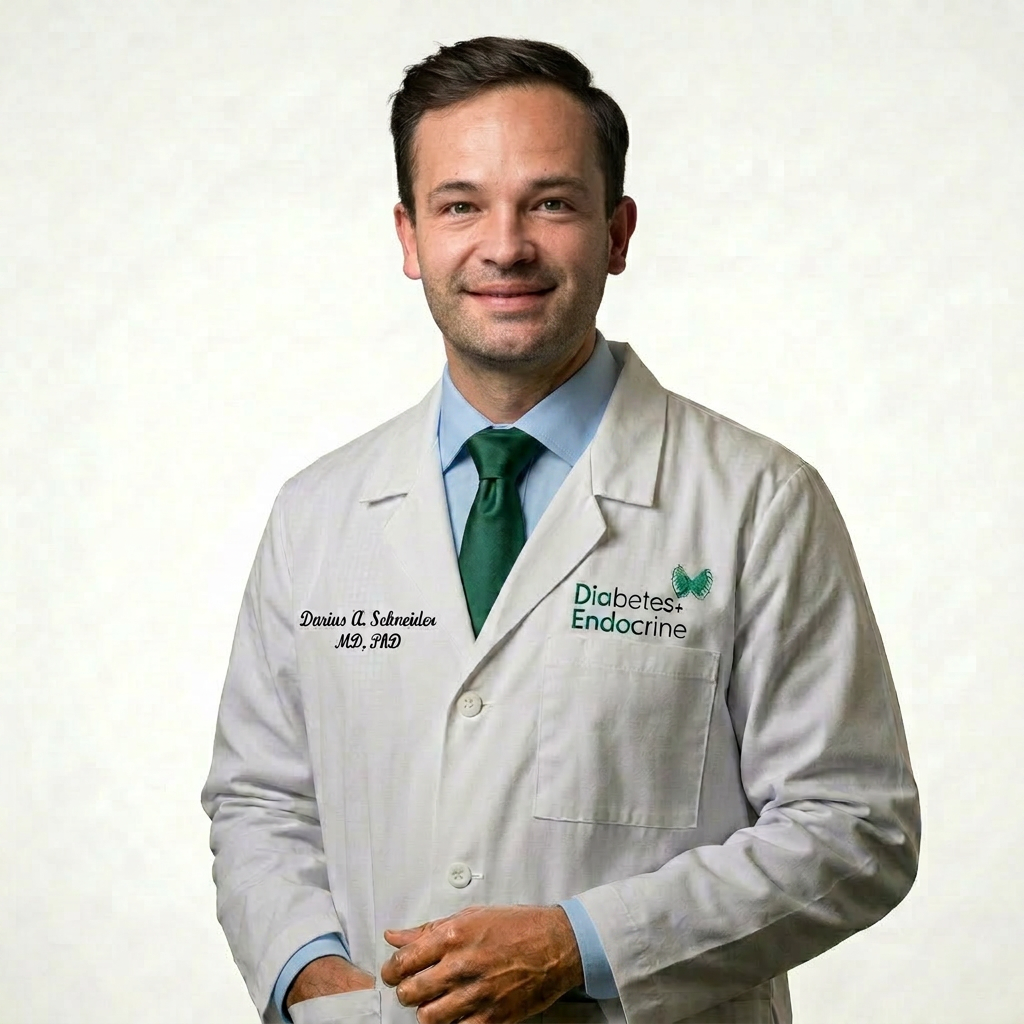
Written by Darius A. Schneider, MD, PhD · Board-Certified Endocrinologist (ECNU) · Last updated: 2026-08-10 · References: AASLD Practice Guidance on MASLD (2023); EASL–EASD–EASO guidance; guideline-based FIB-4 cutoffs (<1.3 / >2.67; age-adjusted ~2.0 at ≥65); 2023 MASLD/MetALD nomenclature. Educational only; not a diagnosis and not individualized medical advice.