Obesity should be treated like any chronic disease: understand the person and their biology, define a health goal beyond the scale (diabetes remission, cardiovascular risk, liver health, sleep, mobility, fertility, quality of life), choose evidence-based treatment for that goal, preserve muscle and health during loss, plan maintenance before starting, and measure outcomes that matter.
Why we start with a method, not a medication
Most weight-loss programs begin with a tool — a diet, an injection, an operation — and work backward. We think that is the wrong order. A treatment is only as good as the goal it serves and the plan that sustains it, and the same tool can be excellent for one person and pointless for another.
So W8Experts runs on a single, repeatable clinical framework. It is deliberately unglamorous. It does not promise a number or a timeline. What it does is make sure that every decision — to treat or not, with what, for how long — is anchored to this person's biology and this person's health, rather than to a scale reading or a marketing headline. This is the site's editorial spine made operational: don't treat the scale, treat the person. → Obesity as a Chronic Disease
Below are the seven steps, in order.
Step 1 — Understand the person
Before biology, before labs, before any talk of treatment, we start with the human history. Body weight is the visible output of a system shaped by dozens of inputs, and most of them are invisible on a scale.
- Weight history — when weight changed, what was happening at the time, previous attempts and what actually caused any regain (usually the biology of a defended set point, not a lapse of character). → Why Is Weight So Hard to Lose?
- Medications — a number of common drugs (some antidepressants, antipsychotics, certain diabetes drugs, steroids, some beta-blockers, certain contraceptives) can promote weight gain. This is often reversible and frequently missed.
- Sleep and circadian pattern — short or disrupted sleep and untreated sleep apnea drive appetite and insulin resistance.
- Eating behavior — hunger versus reward eating, night eating, binge-eating disorder, restriction–binge cycles. These change which treatments help and which backfire. → Mental Health & Obesity
- Life context — work schedule, caregiving, food access, finances, stress, culture. "Eat less, move more" is biologically true and clinically incomplete; context decides whether any plan is livable.
- Comorbidities and goals in the patient's own words — what they actually want to be able to do.
No shame, no moralizing. A person's weight is not a verdict on their discipline, and the intake reflects that.
Step 2 — Understand the biology
The same body weight can arise from very different physiology, and the physiology changes what will work.
- Where the fat is. Visceral and ectopic fat (around organs, in the liver) is far more metabolically harmful than subcutaneous fat. Two people at the same BMI can carry very different risk. → BMI, Body Fat & Body Composition
- Metabolic health. Insulin resistance, prediabetes or diabetes, dyslipidaemia, blood pressure, and liver status (fat and fibrosis — not the same thing) tell us what the adiposity is actually doing. → Obesity & Diabetes · Fatty Liver / MASLD
- Appetite and reward biology. How strongly is the body defending its weight? Persistent hunger and "food noise" point toward biology that responds well to appetite-targeting medication. → Why Is Weight So Hard to Lose?
- Hormonal and genetic contributors. Thyroid disease can contribute but rarely explains most of the weight; PCOS, cortisol excess, and heritable susceptibility (roughly 40–70% heritability) all shape the picture. → Obesity & Hormones · Genetics of Obesity
We do not run a reflex "full hormone panel" on everyone. We test what will change the plan. → Weight-Loss Lab Library
Step 3 — Define the goal (which is rarely "weight")
This is the step most programs skip, and the one that matters most. The scale is a crude proxy. The real goal is almost always a health outcome, and naming it changes everything downstream — how much loss is enough, which treatment fits, and what "success" looks like.
Common real goals include:
- Type 2 diabetes remission or better control → Obesity & Diabetes
- Cardiovascular risk reduction — fewer heart attacks and strokes, not just a lower number. Losing weight and reducing cardiovascular events are related but not identical. → Obesity & Cardiovascular Health
- Fatty-liver disease — reducing liver fat and, more importantly, stabilising or reversing fibrosis. → Fatty Liver / MASLD
- Obstructive sleep apnea — a treatable, high-impact target; tirzepatide is now FDA-approved for moderate-to-severe OSA in adults with obesity.
- Mobility, joint pain and physical function
- Fertility — including PCOS-related infertility. → PCOS & Weight
- Quality of life — energy, mood, participation, freedom from constant food preoccupation.
An evidence-based reframe: even 5–10% sustained weight loss meaningfully improves glucose, blood pressure, lipids and liver fat. Health improves long before any "ideal" weight, so the goal is defined in health terms, not a cosmetic number. → Obesity as a Chronic Disease
Step 4 — Choose appropriate treatment
Only now do we choose tools — and we choose them to fit the person, the biology and the goal, not the other way round. No treatment is morally superior to another. Behaviour is not virtuous and medication is not cheating; each is a means to a health end.
The options, matched to fit:
- Nutrition — not a single prescribed diet, but the sustainable pattern that meets this person's medical needs and preferences. The best diet is the one they can actually maintain. → Nutrition
- Physical activity and resistance training — for health, fitness, function and muscle preservation more than for scale weight. → Exercise, Muscle & Body Composition
- Behavioural support — for eating patterns, sleep, stress and the psychology of change.
- Medication — GLP-1 and dual incretin therapies (semaglutide, tirzepatide) and others, when adiposity-related disease and biology warrant them. → GLP-1 & Incretin Medications · Obesity Medication Library
- Combination — lifestyle plus medication is usually additive, not either/or.
- Endoscopic options — for selected patients. → Endoscopic Obesity Treatment
- Bariatric/metabolic surgery — the most durable option, with ~25–30% total weight loss common and strong type 2 diabetes remission rates; it carries nutritional and follow-up obligations. → Bariatric Surgery
Matching matters more than potency. The strongest drug is worthless if it doesn't fit the goal, the biology or the life.
Step 5 — Preserve health during weight loss
Rapid or large weight loss is not automatically healthy weight loss. When you lose weight by any means — diet, drug or surgery — some of what is lost is lean tissue, not just fat. The aim is to lose excess fat while preserving functional lean mass. → GLP-1 & Muscle Loss
Our loss-phase protections:
- Protein — adequate intake to defend lean mass during a calorie deficit.
- Resistance training — the single most effective way to protect muscle and strength while losing fat. → Exercise, Muscle & Body Composition
- Micronutrients and bone — screening and support, particularly with very low intake or after surgery; bone density can fall with large losses.
- Liver — tracking that liver fat and fibrosis are moving in the right direction, not just that weight is falling. → Fatty Liver / MASLD
- Psychological health — watching for restriction–binge cycles, disordered eating and the emotional side of rapid change. → Mental Health & Obesity
A note on how we read "muscle loss" headlines: a lower DXA lean-mass number is not proof a drug "destroys muscle." Lean mass includes water and organ mass, and some decline is expected and appropriate when a large body gets smaller. What matters is strength and physical function, which protein and resistance training defend. We apply that discipline rather than the scare version. → GLP-1 & Muscle Loss
Step 6 — Plan maintenance BEFORE starting
Obesity is a chronic, relapsing disease. Stopping effective treatment predictably reverses much of its benefit — after semaglutide is withdrawn, people regain roughly two-thirds of lost weight within about a year, and the cardiometabolic gains reverse with it. That is the biology of a defended set point, not a personal failure. → Weight Regain & Maintenance
So we design the maintenance strategy before the intensive loss phase, not after regain begins. That means deciding in advance:
- What the long-term plan is if a medication works — continue, taper, or transition, and on what evidence.
- How lifestyle and monitoring will carry the maintenance load.
- What we will do if weight creeps back (adjust the plan — not assign blame).
- How to make the eventual weight sustainable rather than the lowest possible number held by heroic effort.
The uncomfortable truth stated plainly: a treatment that produces spectacular loss and is then stopped without a plan often ends where it began. Maintenance is not the afterthought — it is the design constraint. → GLP-1 hub
Step 7 — Measure what matters
If you only measure weight, you will optimise for weight — sometimes at the expense of health. We track the outcomes that reflect the goal defined in Step 3:
- Waist circumference — visceral fat, often more informative than BMI. → BMI, Body Fat & Body Composition
- Blood pressure
- A1c and glucose — glycaemic control and diabetes status. → Obesity & Diabetes
- Lipids — the atherogenic picture, not just total cholesterol. → Obesity & Cardiovascular Health
- Liver — enzymes and, where relevant, FIB-4 and elastography (fat and fibrosis are measured separately). → Fatty Liver / MASLD
- Fitness and strength — cardiorespiratory fitness and functional strength are powerful health predictors.
- Body composition — fat versus lean, not just total mass.
- Quality of life, sleep and function — energy, mood, sleep apnea, mobility, food freedom.
When these move in the right direction, the weight usually follows — and even when the scale is stubborn, health can improve. That is the outcome we care about.
What the evidence says (about this whole approach)
- What we know: obesity is a chronic, relapsing, biologically defended disease; modest sustained loss improves multiple health outcomes; several treatments (behaviour, medication, surgery) have strong evidence; regain after stopping treatment is predictable. Grade A 🟢
- What we think: matching treatment to the person, protecting muscle, and planning maintenance in advance produce better long-term health than a scale-first approach. Grade B 🟡
- What we don't know: the ideal long-term maintenance strategy after modern medications, and who can safely stop, are still being worked out. Grade B 🟡
- What patients should do: define a health goal with a clinician, choose a treatment matched to it, protect muscle and plan maintenance from the start, and judge success by health markers, not only the scale.
Questions patients ask
If the goal isn't the number on the scale, what is it?
It depends on you — it might be reversing prediabetes, lowering heart-attack risk, improving fatty liver, treating sleep apnea, restoring fertility, easing joint pain, or simply feeling well and free of constant food preoccupation. Weight is a means; health is the end. Even 5–10% sustained loss meaningfully improves most of these. Grade A 🟢 → Obesity & Diabetes
Is one treatment better than the others — is medication "cheating"?
No. Nutrition, activity, behaviour, medication and surgery are tools, not moral categories. The right one is the one that fits your biology, your goal and your life. We choose to match the person, not to rank the tools. Grade A 🟢 → GLP-1 hub
Will I lose muscle, and can I prevent it?
Some lean tissue is lost with any weight loss, but adequate protein and resistance training protect strength and function, which are what actually matter. A lower "lean mass" number on a scan is not the same as a drug destroying muscle. Grade B 🟡 → GLP-1 & Muscle Loss
Why do you plan maintenance before I've even lost weight?
Because obesity is a relapsing disease — stopping effective treatment without a plan predictably reverses much of the benefit (after semaglutide, people regain about two-thirds within a year). Designing maintenance first is how the results last. Grade A 🟢 → Weight Regain & Maintenance
Do I have to be on medication for life?
Not necessarily. "Chronic" means long-term management, but the form varies — for some it's lifestyle and monitoring, for others medication or surgery. Lifelong attention is not the same as lifelong medication. Grade A 🟢 → Obesity as a Chronic Disease
How will we know if it's working if we're not just watching the scale?
We track waist, blood pressure, A1c and glucose, lipids, liver markers, fitness, strength, body composition and quality of life. These reflect real health, and they often improve even when the scale is stubborn. Grade A 🟢
Do you test everyone for hormone problems first?
No. We test what will change the plan. A reflex full hormone panel on everyone is low-value; targeted testing based on your history and biology is not. Grade B 🟡 → Weight-Loss Lab Library
The bottom line
KEEP READING (Related block)
- Obesity as a Chronic Disease — why weight is biologically defended, and what that means for treatment.
- Nutrition — why the best diet is the one you can sustain, not a single universal plan.
- Exercise, Muscle & Body Composition — how to lose fat while keeping the strength that matters.
- Weight Regain & Maintenance — the physiology of regain and how to plan for it in advance.
- GLP-1 & Incretin Medications — when appetite-targeting medication fits the plan.
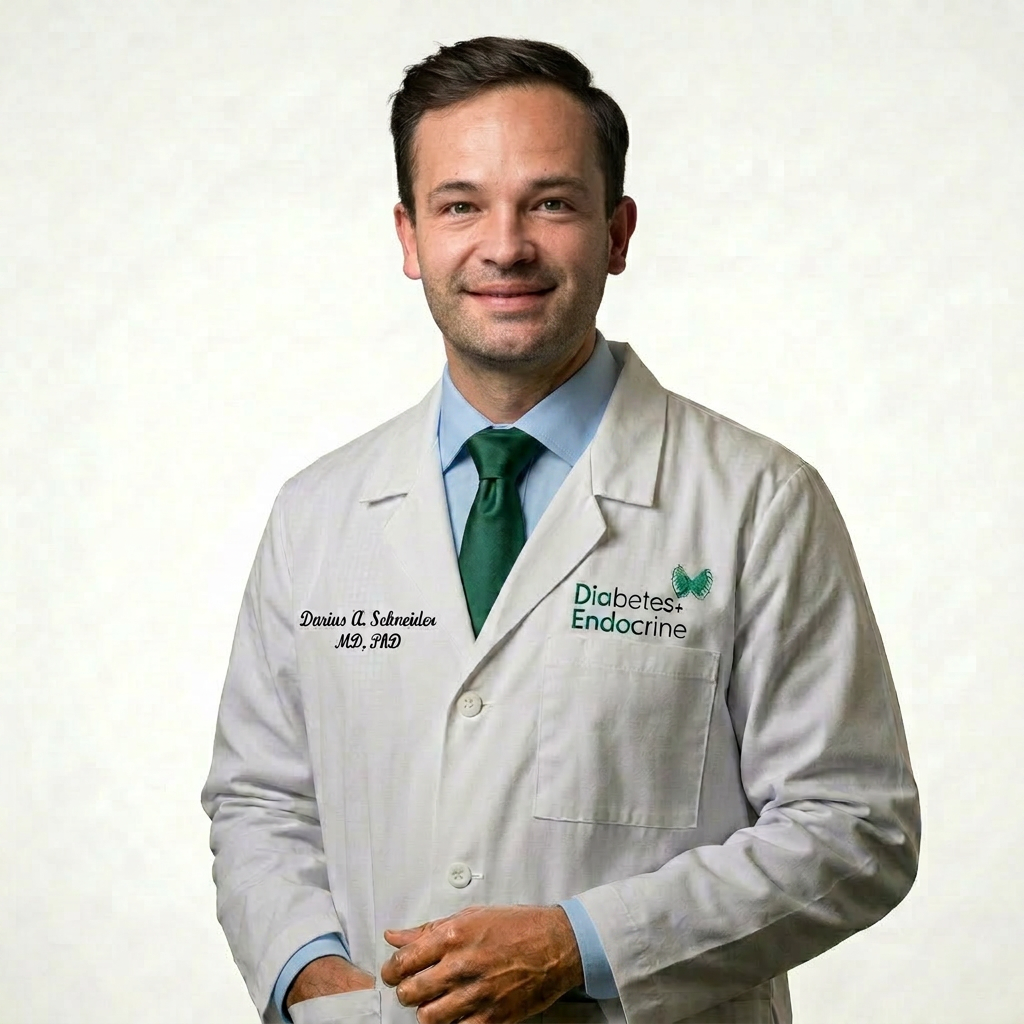
Written by Darius A. Schneider, MD, PhD · Board-Certified Endocrinologist (ECNU) · Last updated: August 2026 · References: AACE/ACE adiposity-based chronic disease framework; Obesity Medicine Association clinical definition; AHA/ACC/TOS and Endocrine Society obesity management guidance; STEP and SURMOUNT programme data; Sumithran et al. (NEJM) on appetite hormones after weight loss. Educational; not individualized advice.